
Web Development
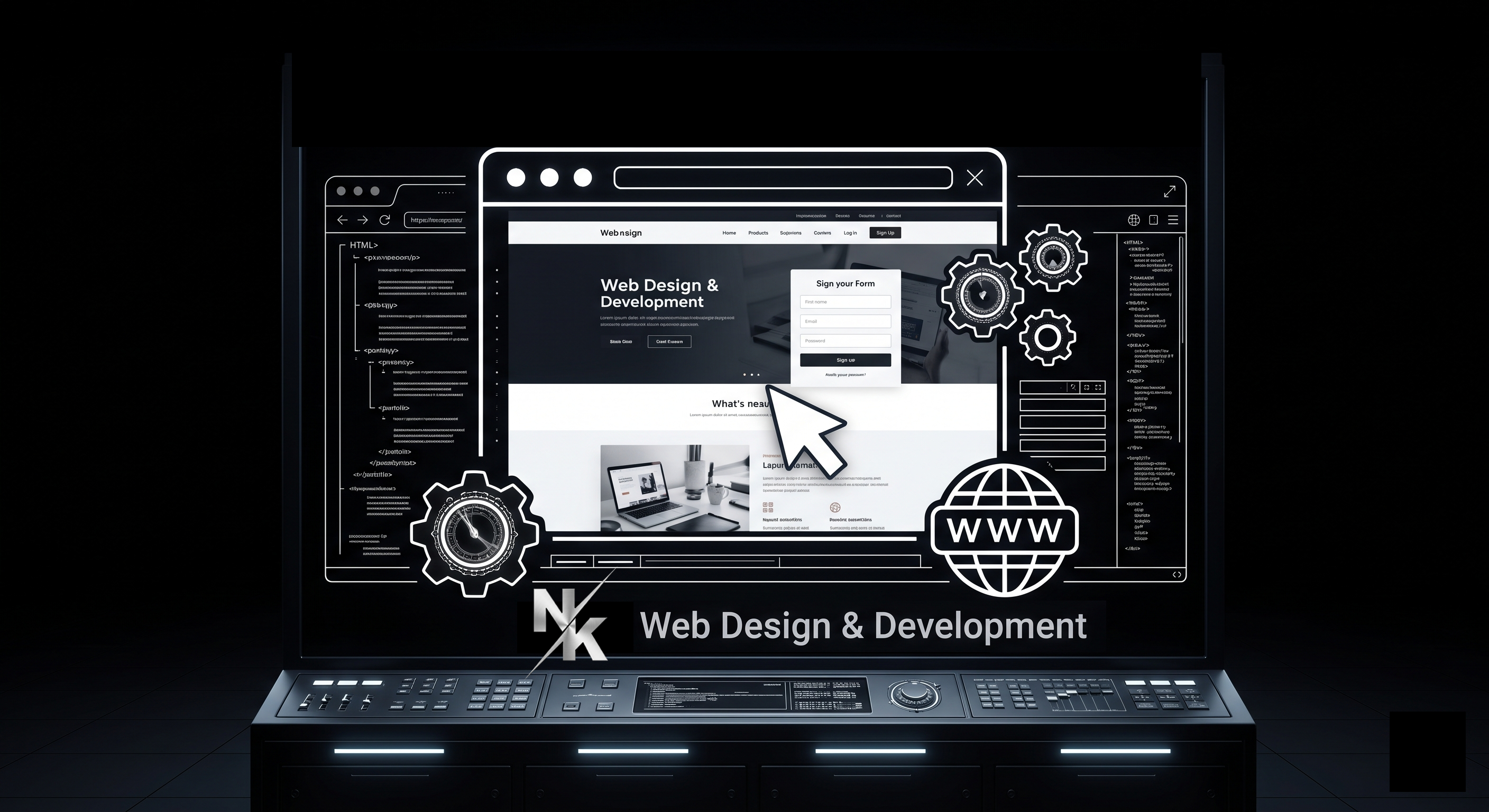
Web Design:
Web design focuses on the visual appearance, layout, branding, typography, color schemes, imagery, navigation, and overall user experience (UX) of a website. It ensures that websites are attractive, responsive, accessible, and easy to use across desktops, tablets, and mobile devices.
Web Development:
Web development is the process of building and maintaining websites and web applications. It includes front-end development using HTML, CSS, and JavaScript to create interactive interfaces, back-end development using server-side technologies to manage databases, authentication, business logic, and APIs, and full-stack development that combines both.
Responsive Design:
Responsive design enables websites to automatically adapt to different screen sizes and devices, providing a consistent user experience. UI/UX: User Interface (UI) design focuses on the look and feel of a website, while User Experience (UX) ensures users can easily accomplish their goals through intuitive navigation and usability.
Content Management:
CMS platforms allow website owners to create, edit, and manage digital content without extensive programming knowledge.
SEO:
Search Engine Optimization improves website visibility in search engines through optimized content, metadata, site structure, performance, and mobile friendliness.
Performance & Security:
Optimization techniques such as image compression, caching, and code minification improve speed, while HTTPS, secure authentication, regular updates, backups, and vulnerability protection ensure website security.
Testing & Maintenance:
Testing verifies functionality, compatibility, accessibility, and performance before deployment. Ongoing maintenance includes updates, bug fixes, security monitoring, content updates, and feature enhancements.